
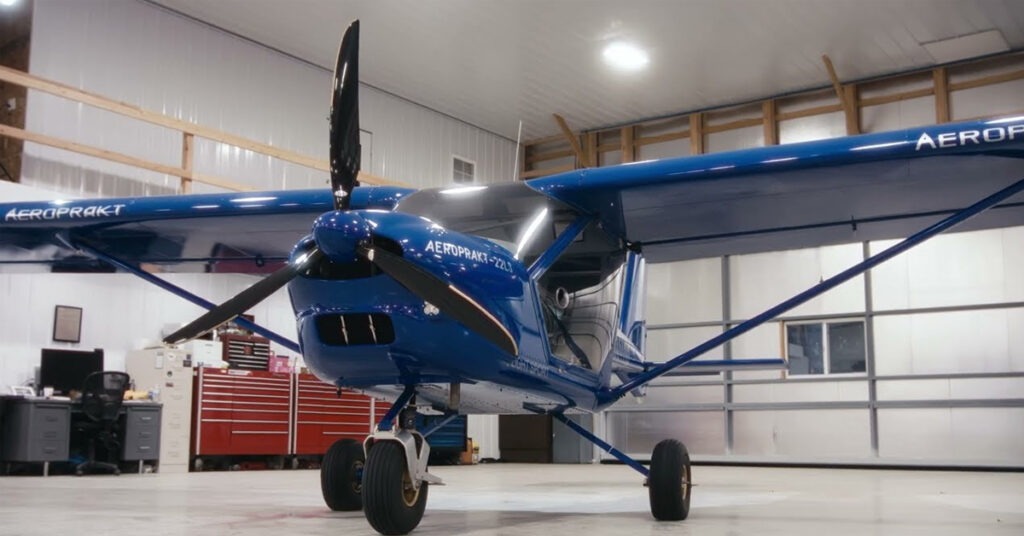
If you’ve signed up for a DreamFlight Discovery Event, you already know that you’re likely to take to the skies in an Aeroprakt A-32. But you might be wondering: what exactly is an Aeroprakt? Where does it come from? Why do we fly it?
The answer to those questions start in Kyiv, Ukraine, and ends with one of the most thoughtfully designed training aircraft in general aviation today. Whether you’re a student about to take your first flight or a parent trying to understand what your son or daughter will be sitting in, this is worth knowing.
Built by Engineers Who KnewHow to Dream Big
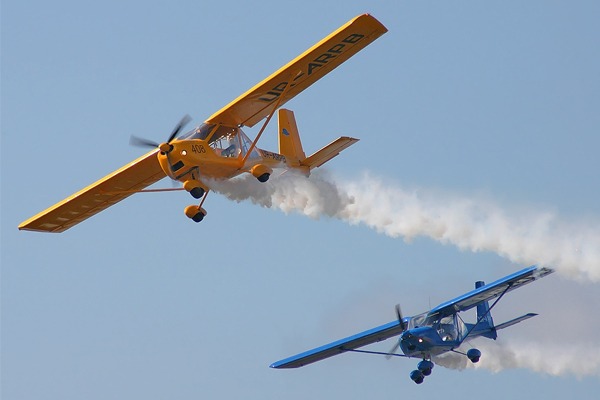
The company behind your aircraft — Aeroprakt — was founded by engineers who came from the Antonov Design Bureau, one of the most storied aerospace organizations in the world. Antonov built aircraft that crossed continents and carried impossible loads. The engineers who eventually formed Aeroprakt brought that same exacting, safety-first culture to a very different mission: creating light, accessible aircraft that could put more people in the air.
That founding philosophy matters. Aeroprakt’s stated design goal, from the beginning, has been to maximize safety, comfort, and rugged construction. These aren’t marketing words — they show up in every design decision the company has made across two generations of aircraft.
The A-22: Where it Started
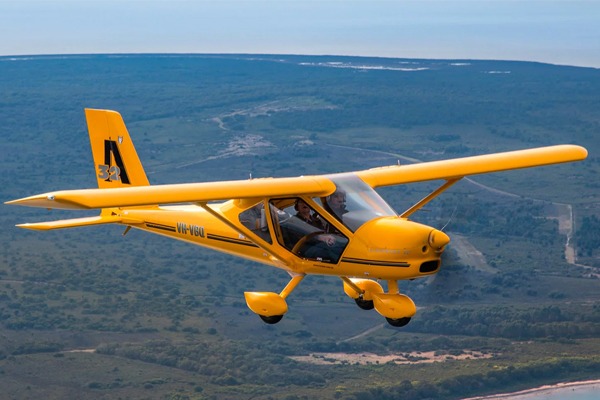
In the mid-1990s, Aeroprakt’s lead designer Yuri Yakovlev set out to build a two-seat, high-wing aircraft that could be flown by a wide range of pilots in a wide range of conditions. The result was the A-22, which made its first flight in October 1996 and entered certified production in 1999.
The A-22 — known in the United States as the Valor and in the UK and Australia as the Foxbat — became a quiet success story in the light sport world. More than 1,600 have been built and flown around the globe. Its popularity came down to a few core qualities that pilots kept coming back to.
It was forgiving. With a stall speed of just 35 miles per hour — slower than most light sport aircraft — the A-22 gave student pilots real margin for error. It wasn’t trying to punish you for imprecision. It was designed to teach.
It was tough. The A-22’s metal airframe, with riveted anodized aluminum construction, was built to handle the kind of hard use that comes with flight training. It didn’t need to be babied.
It was roomy. Side-by-side seating meant the student and instructor sat next to each other, not one behind the other. That single feature changes the learning dynamic entirely. You can point at things, ask questions mid-flight, and share the experience in real time.
It was accessible. Powered by the Rotax 912 — a four-cylinder engine that has become the gold standard for light sport aircraft worldwide — the A-22 offered reliable performance without complexity. With a cruise speed around 114 mph and a takeoff roll under 200 feet, it could get in and out of small fields and handle a full day of training flights without complaint.
The A-22 established the Aeroprakt reputation: serious about safety, practical in design, and built for real-world flying rather than showroom impressions.
The A-32: Everything Learned, Applied
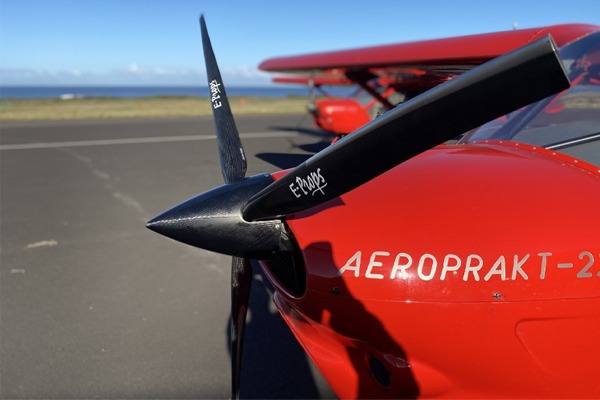
By the early 2010s, Yakovlev and his team went back to the drawing board — not to fix something broken, but to build something better. The result was the A-32 Vixxen, and it represents a generational leap.
The two aircraft share a wing, an engine, and a philosophy. Almost everything else is new.
The fuselage was redesigned from scratch. Where the A-22 used a rectangular cross-section fuselage — practical and sturdy — the A-32 uses a fully rounded, monocoque design. The curved surfaces eliminate flat panels that could flex and rattle, reducing drag and wind noise significantly. The result is an aircraft that feels quieter and cleaner in the air.
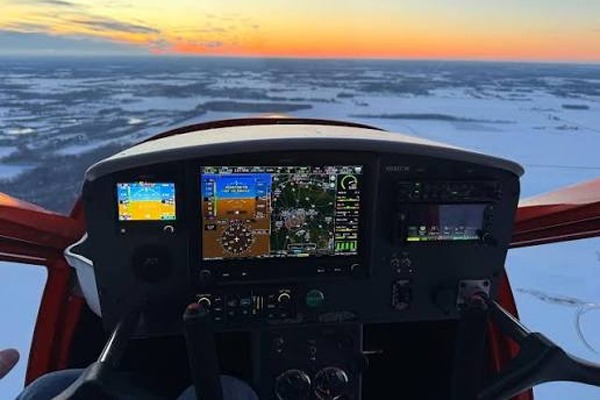
The forward view is unobstructed. This was one of the most meaningful improvements for training. The A-22 had structural tubes crossing the lower windshield — a small but persistent intrusion into the pilot’s sightline. The A-32 engineered those tubes out of the forward view entirely. The windshield opens up wide and clear, giving both pilot and passenger a panoramic view that is genuinely difficult to describe until you experience it.
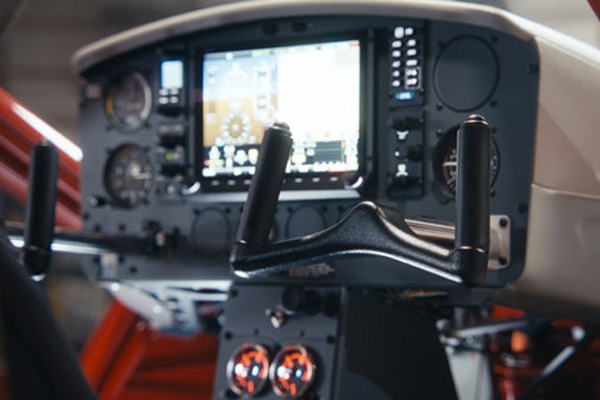
The cockpit got smarter. Wings Flight Training’s A-32 is equipped with a Garmin G3X glass panel — the same family of technology used in far more expensive aircraft. You’ll see digital flight instruments, moving maps, and real-time data on a screen that looks more like a tablet than the round-dial gauges of aviation’s past. It’s an introduction to the cockpit environment that mirrors what modern pilots actually fly.
Performance improved across the board. The A-32 cruises comfortably at 130 miles per hour — meaningfully faster than the A-22. Its stall speed is lower. Its range is longer. The overall package is more efficient, quieter, and more capable, without sacrificing any of the forgiving, student-friendly handling that made the A-22 a training staple.
One aviation writer who flew the A-32 and had long been familiar with the A-22 put it simply: “Where the A-22 Foxbat is a great ab-initio trainer and go-anywhere farmer’s aircraft, the A-32 feels like it is much more of a sport cross-country aircraft and intermediate trainer.”
That description captures something real. The A-32 doesn’t feel like a compromise between affordability and capability. It feels like an aircraft that knows exactly what it wants to be.
What This Means for You in the Cockpit
Here is the practical version of everything above.
When you climb into the A-32 for your DreamFlight Discovery experience, you’ll sit next to your instructor in a wide, comfortable cockpit. The seats are adjustable on a rail system that accommodates pilots of nearly any size — and there’s genuine legroom, even for tall students. The view over the nose is excellent. The view downward, through the high wing mounted above the cabin, is extraordinary.
The aircraft is responsive without being twitchy. When your instructor says “she’s yours” and puts the controls in your hands, the A-32 will let you feel what flight actually means — the subtle pressure of a gentle bank, the nose rising as you apply back pressure, the way altitude and speed relate to each other in a way that no ground school lesson can fully prepare you for.
It will not try to punish your mistakes. It will not demand perfection. It is, fundamentally, an aircraft that wants you to succeed in it.
That’s not an accident. It’s the result of twenty-five years of refinement by a company that started with the premise that more people deserve access to flight, and then spent decades engineering an aircraft worthy of that idea.
A Note for Parents
We know that entrusting your student to a small aircraft takes a certain amount of faith. We want you to know that the Aeroprakt A-32 is a certified light sport aircraft that meets rigorous safety standards, is operated by professional instructors at Wings Flight Training, and is maintained to the same standards as any aircraft in the national training fleet.
Its low stall speed, stable handling characteristics, and proven design make it one of the most appropriate aircraft in existence for introductory flight experiences. And its Rotax 912 engine — the same powerplant found in thousands of training aircraft worldwide — has one of the best reliability records in general aviation.
Your student is in good hands. The aircraft they’re flying was built by people who cared deeply about exactly this moment.
The A-22 and the A-32 are different aircraft, but they share a lineage. Both are expressions of the same core belief: that flight should be accessible, that safety should be non-negotiable, and that the aircraft you learn in shapes what kind of pilot you become.
At DreamFlight Charities, we chose the Aeroprakt family because it reflects our own mission. We believe that the barriers between a student and their potential in aviation should be as few as possible — and that includes the aircraft itself. The A-32 is a remarkable place to begin.
DreamFlight Charities offers Discovery Flights and Training Scholarships for students across Kentucky.