

Aviation is often described as a world of precision – precision in navigation, performance, maintenance, and timing. Yet behind all of it lies something even more fundamental: communication. Radios, checklists, hand signals, light guns, logbooks, and standardized phraseology form a complex web that allows thousands of aircraft to operate safely every day.
Communication in aviation is not merely helpful – it is foundational to safety.
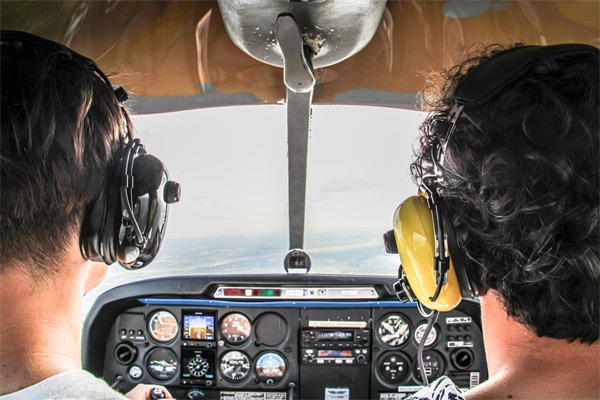
Why Communication is Critical
Unlike many other forms of transportation, aviation operates in a three-dimensional environment at high speeds. Aircraft cannot simply “pull over” in the sky. Decisions must be made quickly, and those decisions are often dependent on accurate, timely information.
Effective communication accomplishes several key objectives:
- Enhances situational awareness – Pilots must know where other aircraft are, what weather lies ahead, and what instructions apply to them.
- Reduces risk of collision – Clear communication between pilots and Air Traffic Control (ATC) prevents aircraft from occupying the same airspace or runway at the same time.
- Ensures operational efficiency – Proper coordination reduces delays, confusion, and workload.
- Supports safety culture – Clear maintenance documentation and pilot-mechanic briefings prevent mechanical misunderstandings.
A breakdown in communication is frequently cited as a contributing factor in aviation incidents. For that reason, the aviation community treats communication as a discipline – not an afterthought.
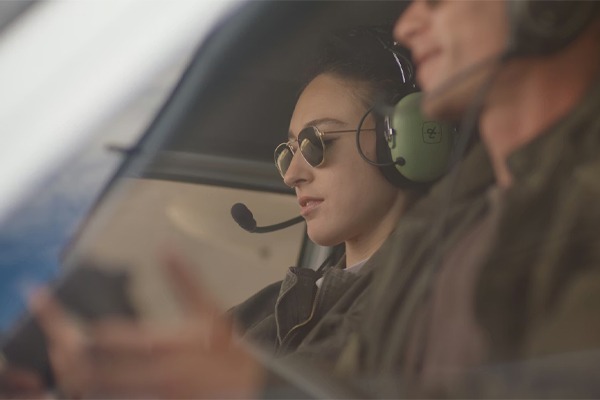
The Aviation Communication Network
Aviation communication functions as an interconnected network, with each participant playing a vital role:
Pilots communicate:
- With Air Traffic Control (ATC) for clearances, traffic advisories, weather updates, and sequencing.
- With other pilots (especially at non-towered airports) to announce position and intentions.
- With mechanics regarding aircraft discrepancies.
- With passengers to ensure safety and confidence.
Air traffic controllers serve as the coordinators of the sky. They:
- Issue clearances and instructions.
- Maintain separation between aircraft.
- Provide weather and traffic advisories.
- Coordinate with adjacent control facilities.
Communication doesn’t stop when the engine shuts down. Maintenance technicians:
- Document discrepancies in aircraft logbooks.
- Communicate required repairs and inspections.
- Verify airworthiness before flight.
A small misunderstanding in maintenance documentation can have significant consequences. Clear written communication is just as important as radio communication.
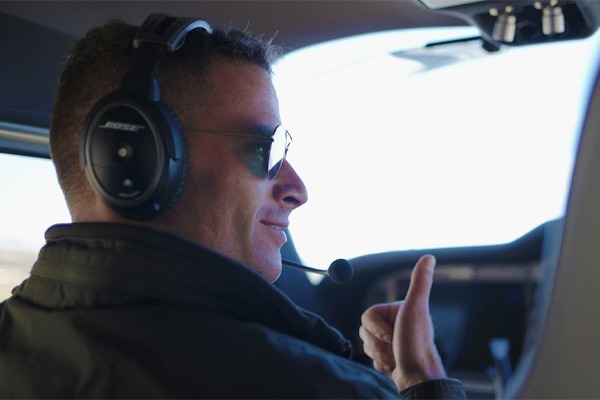
The Power of Standardized Language
To reduce ambiguity, aviation relies on standardized phraseology developed by the International Civil Aviation Organization (ICAO) and adopted by aviation authorities worldwide.
Instead of casual conversation, aviation uses specific terminology:
- “Cleared for takeoff” has only one meaning.
- “Stand by” does not mean “proceed.:
- “Affirmative” replaces “yes.”
- “Negative” replaces “no.”
Numbers are spoken differently (“niner” instead of “nine”) to prevent confusion. The phonetic alphabet – Alpha, Bravo, Charlie – ensures that letters are clearly understood over congested radio transmissions.
This standardization:
- Reduces misunderstandings across languages and accents.
- Creates predictable communication patterns.
- Supports safe international operations.
In aviation communications, clarity is more important than creativity.
When Radios Fail:Non-Verbal Communication
While radios are the primary tool of communication, aviation includes built-in redundancies in case verbal communication fails.
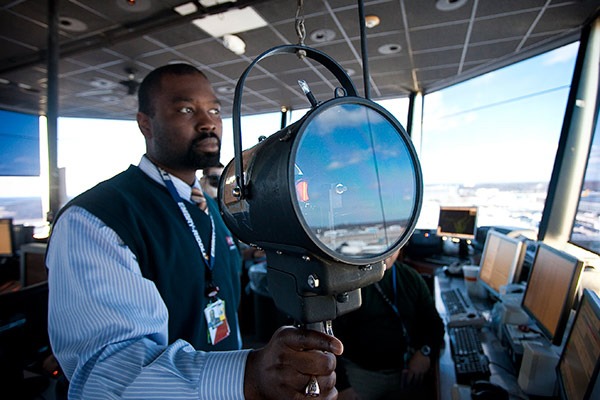
At towered airports, if an aircraft experiences radio failure, controllers can use a signal light gun to communicate with pilots. Different colored lights convey specific instructions:
- Steady Green – Cleared to take off or land.
- Flashing Green – Cleared to taxi or return for landing.
- Steady Red – Stop or give way.
- Flashing Red – Taxi clear of runway.
- Flashing White – Return to starting point.
- Alternating Red and Green – Exercise extreme caution.
Additionally, if a pilot experiences radio failure, they may set a specific transponder code (7600) to alert ATC that communications have been lost. This allows controllers to adjust separation and anticipate standard procedures.
On the ground:
- Marshaling signals guide aircraft into parking positions.
- Hand gestures communicate engine start, shutdown, or brake release.
- Airport signage and runway markings convey standardized instructions visually.
And, as mentioned before, aircraft maintenance logs, dispatch releases, and flight plans form another critical communication channel in written form, with records ensuring continuity and accountability.

Communication as a Culture
Perhaps most importantly, communication in aviation is cultural. Pilots are trained to:
- Speak up if something seems unsafe.
- Clarify when unsure.
- Confirm critical instructions.
- Avoid assumptions.
Modern safety programs emphasize open reporting and transparent communication. Silence, hesitation, or ambiguity have no place in aviation.
From cockpit to control tower, from maintenance hangar to passenger briefing, communication binds aviation together. It enables trust between strangers separated by miles of sky. It allows complex systems to function smoothly and safely. And it ensures that every flight – whether carrying business travelers, families, or DreamFlight participants – arrives safely at its destination.
In aviation, communication isn’t just about talking. It’s about understanding.