
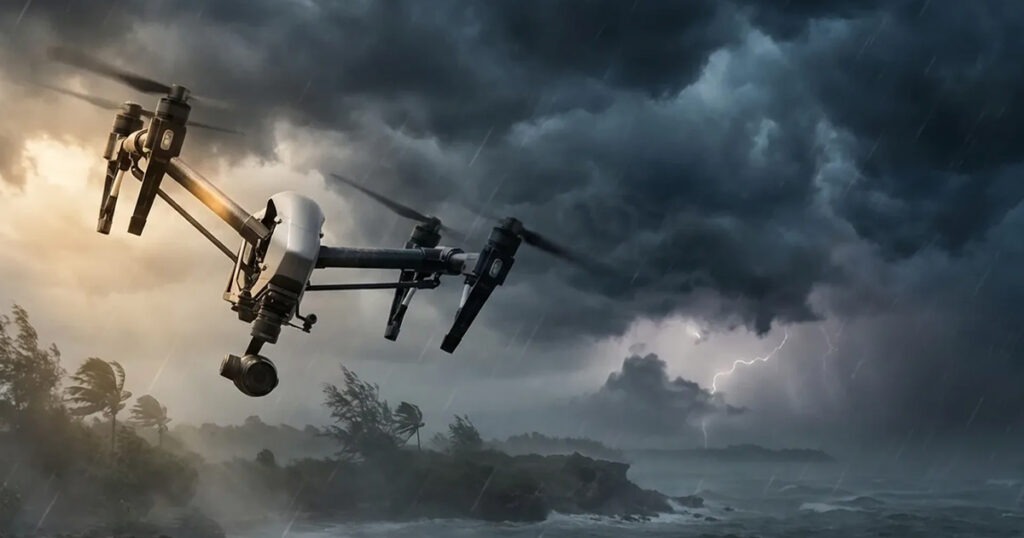
Our OpenSkies Flight Club members have been focusing heavily on drone operations for the semester, with one of their more recent gatherings centering around weather and its impact on unmanned aircraft systems (UAS).
Like pilots managing an aircraft from the cockpit, drone operators must also take into account various factors in regard to the prevailing weather for the day and limitations of their equipment. Drones are far from toys and must be treated with the same level of respect and responsibility as they share airspace with other aircraft.
Aviation Weather: Why It Matters
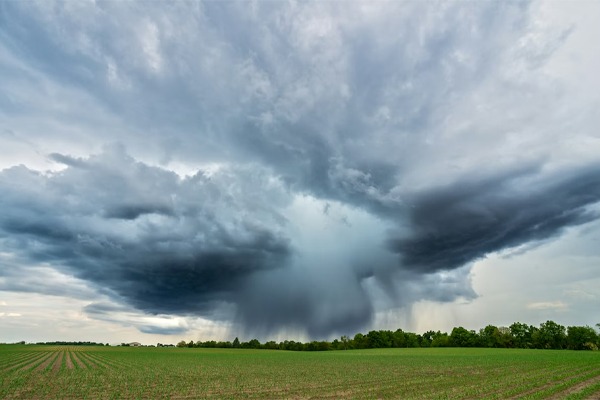
Weather is often the deciding go/no-go decision when it comes to flight, with changes in pressure and the development of wind directly affecting safety, control, and visibility. While larger, more powerful aircraft can often fly above inclement weather, drones are especially susceptible to wind. As a general rule of thumb, good pilots avoid bad weather.
- Weather affects safety, control, and visibility
- Most aviation accidents involve weather
- Drones are especially vulnerable to weather
The Atmosphere: The Ocean We Fly In
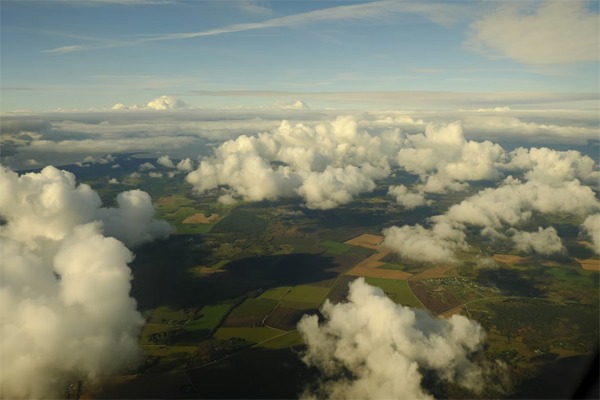
When we think about taking to the skies, both via drone or in an actual aircraft, it should be treated as if we’re flying through an invisible ocean. Just like the currents of the ocean or a river that can rock a boat, air can either help carry our aircraft/drone along, fight against us, or cause severe turbulence.
- Air has weight and movement
- Temperature and pressure change constantly, causing wind movement
- Pressure and temperature changes directly affect lift and control
Key Factors: Pressure, Temperature, & Moisture
Three key things affect weather: pressure, temperature, and moisture. Think of them as the “building blocks” of weather – everything pilots see comes from these three interacting.
High air pressure results in sinking air, while lower air pressure causes air to rise. Rising air often lifts moisture into the atmosphere, creating clouds and storms. In the northern hemisphere, air moving upward will converge inward, upward, in a counterclockwise direction, and is typically more unstable – something we call convective turbulence. Air in high-pressure systems typically moves outward, downward, and in a clockwise rotation.
In thinking about temperature, it’s important to remember that warm air is less dense than colder air. When air is denser, it means that the air molecules are packed more closely together. This more readily affects aircraft engines as warmer air carries less oxygen molecules, affecting combustion and engine performance. Cooler air, being more dense, would carry more oxygen, thereby improving power output and efficiency.
Finally, moisture is the component that, combined with air pressure and temperature, culminates in the formation of clouds and precipitation. If cloud layers are close to the ground, the required Visual Line of Sight (VLOS) for drone operators can be severely impacted. Drone operators, even under Part 107, must be able to see their drone at all times with unaided vision. And, of course, electrically driven motors that power drones are much more susceptible to moisture when compared to piston and jet engines of aircraft.

Wind & Drone Operations
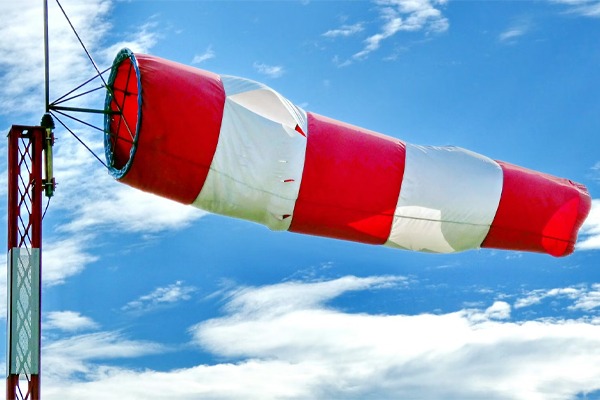
For the most part, wind is going to be the biggest factor to consider when operating a drone. For every operation, operators will want to make note of wind speed and direction. The more wind there is, the more power the drone will have to exert to stay in position or move in opposition to the wind, directly impacting battery life.
Generally speaking, wind speed increases with altitude because air is less affected by friction from the earth’s surface. Obstacles like buildings, hills, or trees can slow air near the ground, while winds aloft encounter less drag and move more freely. Sometimes, the difference between surface winds and winds aloft can be so great that pilots and drone operators experience severe wind shear (change in wind direction or velocity).
In further considering wind, mechanical turbulence directly affects drone operators. This occurs when wind interacts with obstacles and is more severe at low altitudes. This is why drones encounter turbulence more often than airplanes. Winds striking the side of a building can cause updrafts, while wind coming over the top of a building can dip down suddenly, producing a strong downdraft. The same can apply to aircraft flying near tall hills or mountains.
So, before engaging in any sort of flying mission, a good pilot familiarizes themselves with their surroundings while seeking to exercise good judgment. There are plenty of tools at the disposal of pilots and drone operators, like METARs, that can give us a good idea of current weather. Even still, it’s helpful to develop and adhere to personal weather minimums, even when a mission may fall within federal regulations.