
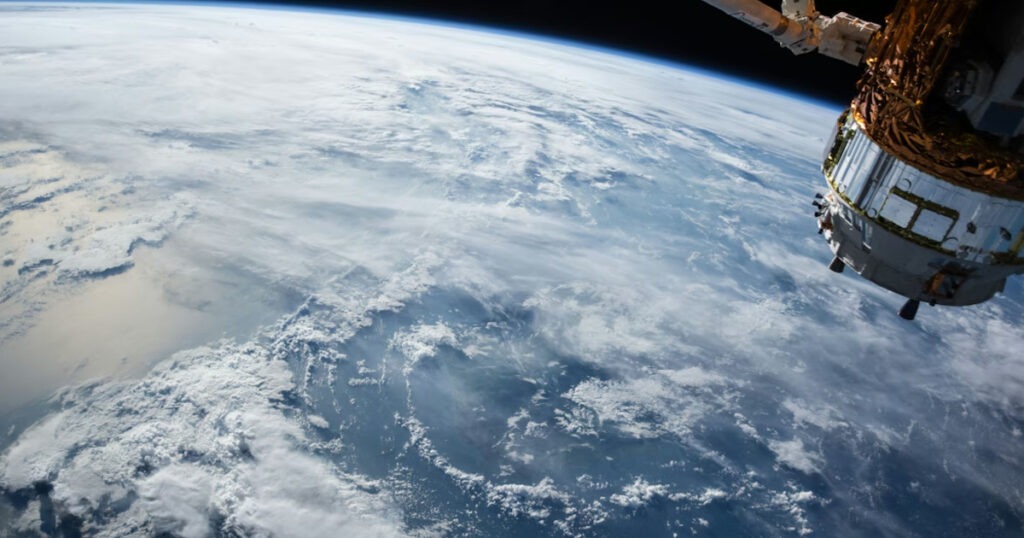
There are moments in history when humanity stops asking “Can we?” and begins asking “How far?”
A visit to the Steven F. Udvar-Hazy Center – along with its sister location, the National Air and Space Museum – captures that shift perfectly. Here, aviation doesn’t just climb into the sky – it breaks free of it entirely.
For our team at DreamFlight Charities, the Space Age exhibits are especially powerful. They tell a story not just of machines, but of bold vision – where pilots become astronauts, with the sky no longer being the limit. And, at the heart of that story, sits one of the most iconic vehicles ever built.
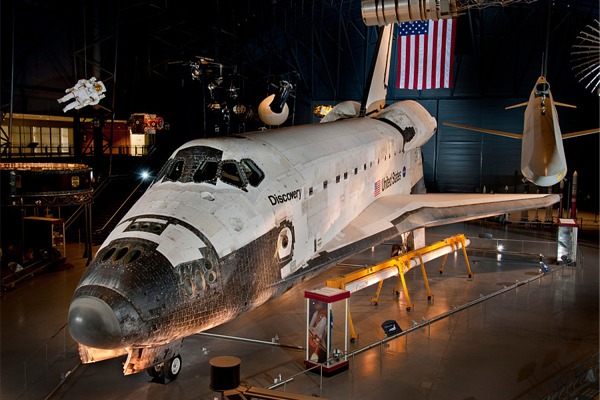
The Space Shuttle Discovery
With its dominating presence within the James S. McDonnell Space Hangar, Space Shuttle Discovery immediately commands attention. But its significance goes far beyond its size.
Discovery represents a turning point in space exploration: the shift from one-time missions to reusable spacecraft. First launched in 1984, it became NASA’s most flown orbiter, completing nearly 39 missions over nearly three decades.
Its accomplishments include:
- Launching the Hubble Space Telescope
- Conducting critical assembly missions for the International Space Station
- Returning to flight after both the Challenger and Columbia tragedies
More than anything, Discovery embodies resilience. It reminds us that progress often comes through perseverance – and that exploration requires both courage and adaptability.
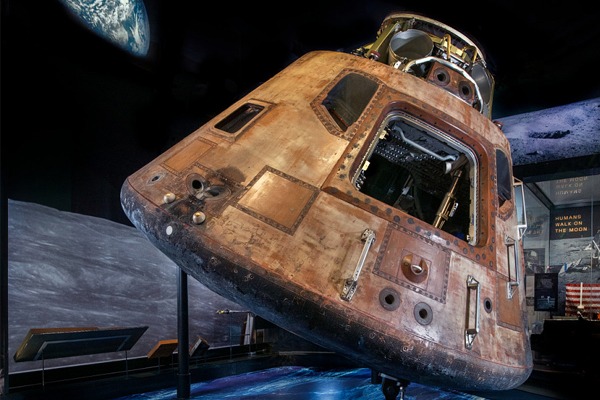
Apollo 11 Command Module Columbia
Across the National Mall at the National Air and Space Museum rests the Apollo 11 Command Module – the spacecraft that carried astronauts to and from the Moon.
This small, heat-scorched capsule stands in stark contrast to the size and sophistication of the Space Shuttle. Yet its impact is immeasurable.
It represents a singular achievement in human history: the Apollo 11 Moon Landing.
Together, Columbia and Discovery illustrate the rapid evolution of spaceflight – from daring first steps to sustained presence in orbit.
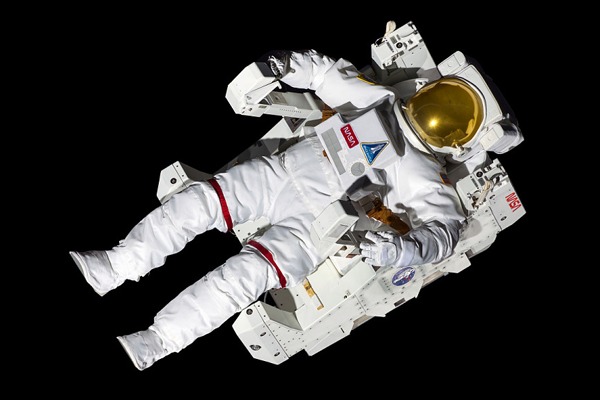
Manned Maneuvering Unit
Among the most captivating artifacts from the Space Shuttle era is the Manned Maneuvering Unit (MMU) – a device that quite literally untethered astronauts from their spacecraft.
First used in the early 1980s Shuttle missions, the MMU allowed astronauts to move freely in space without being physically connected to the orbiter. Using hand controllers, they could navigate in all directions, propelled by small bursts of nitrogen gas.
The MMU’s most iconic moments came during missions aboard the Space Shuttle Challenger, when astronauts conducted untethered spacewalks – floating hundreds of feet away from the safety of their spacecraft with nothing but the unit on their back. It was a breathtaking demonstration of both human capability and trust in engineering.
While eventually retired in favor of safer, tethered systems, its legacy remains powerful. It proved that astronauts could work independently in the vacuum of space – paving the way for more complex extravehicular activities, satellite repair missions, and the construction of structures like the International Space Station.
For students and future explorers, the MMU represents a bold step into true autonomy. It’s a reminder that exploration isn’t just about reaching new places – it’s about learning how to move, work, and thrive once we get there.
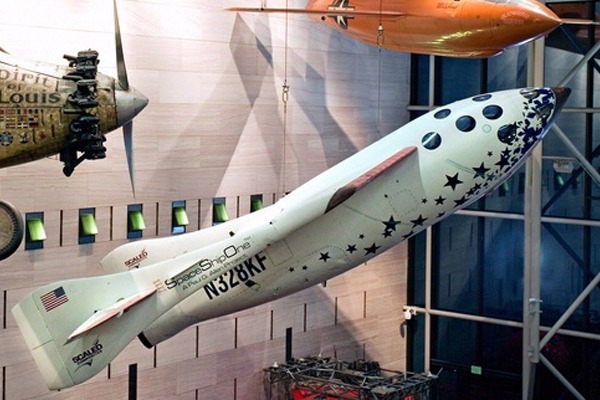
SpaceShipOne
Hanging from the ceiling of the National Air and Museum, in comparison to Space Shuttle Discovery, is a much smaller, but equally groundbreaking vehicle: SpaceShipOne.
In 2004, it became the first privately funded spacecraft to carry a human into suborbital space – winning the Ansari X Prize and ushering in a new era of commercial spaceflight.
Unlike government-led programs of the past, SpaceShipOne proved that innovation could come from smaller teams with bold ideas. Its unique feathering reentry system and air-launch design reimagined how we reach space.
For students today, SpaceShipOne sends a clear message: the future of flight isn’t limited to large agencies – it’s open to innovators, entrepreneurs, and dreamers.
So, before engaging in any sort of flying mission, a good pilot familiarizes themselves with their surroundings while seeking to exercise good judgment. There are plenty of tools at the disposal of pilots and drone operators, like METARs, that can give us a good idea of current weather. Even still, it’s helpful to develop and adhere to personal weather minimums, even when a mission may fall within federal regulations.